05 / AI Surveillance — Case Study

AI-Based Surveillance System

Computer-vision loss prevention for retail — theft, POS fraud and loitering, flagged in real time and routed to the managers who can act on it.

RoleSoftware Engineer I · Slidey LLC
ScopeLead of the web side
TimelineFeb 2026 — Mar 2026
Status100+ stores monitored
DomainRetail loss prevention · CV
ShapeRealtime vision pipeline
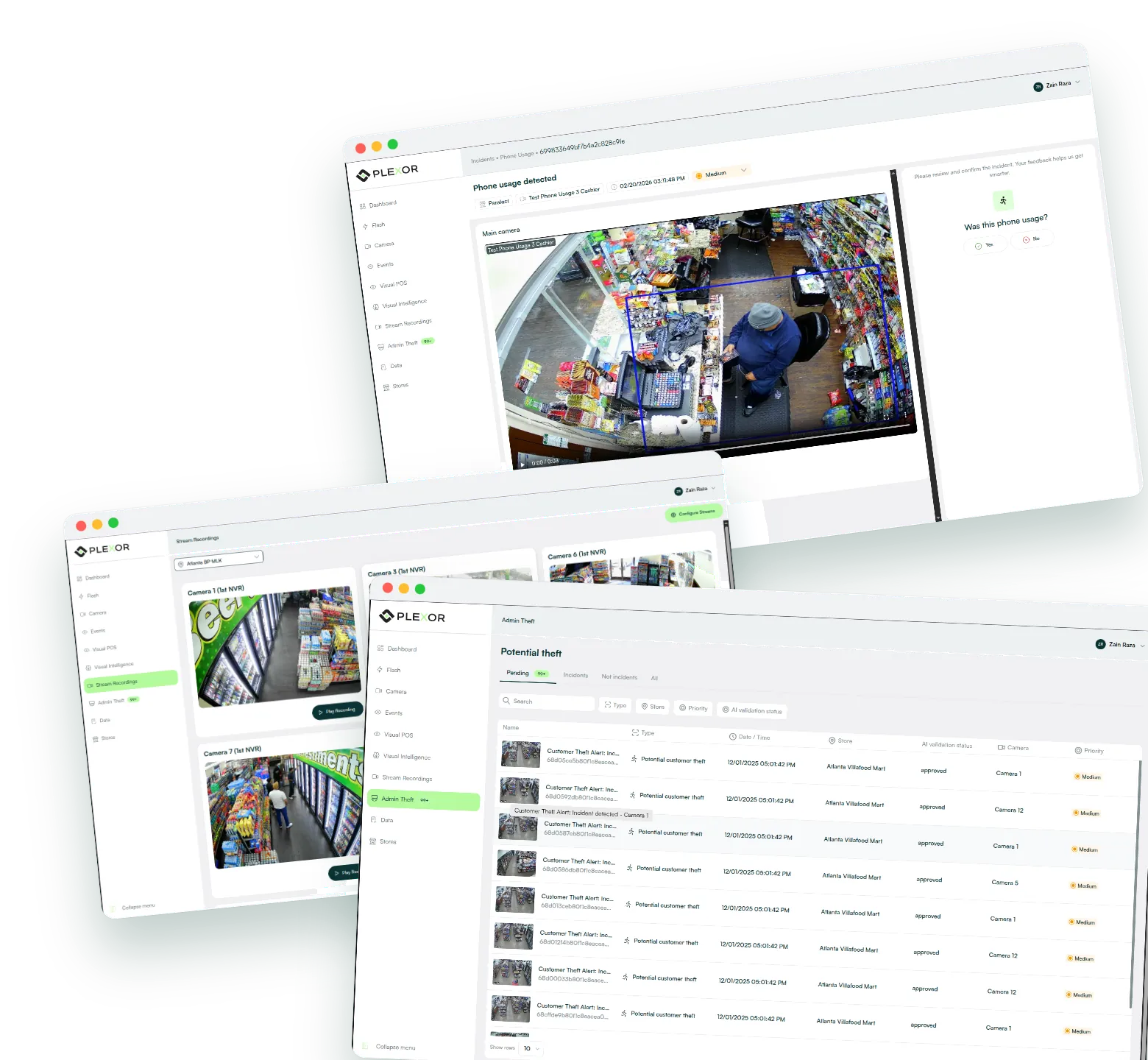
Plexor surveillance dashboards
The Brief

Catch shrinkage while it's happening.

Retail shrinkage from employee & customer theft and POS under-ringing is hard to catch live. Plexor is a multi-camera computer-vision platform that detects it in real time and routes prioritised alerts to store and district managers.
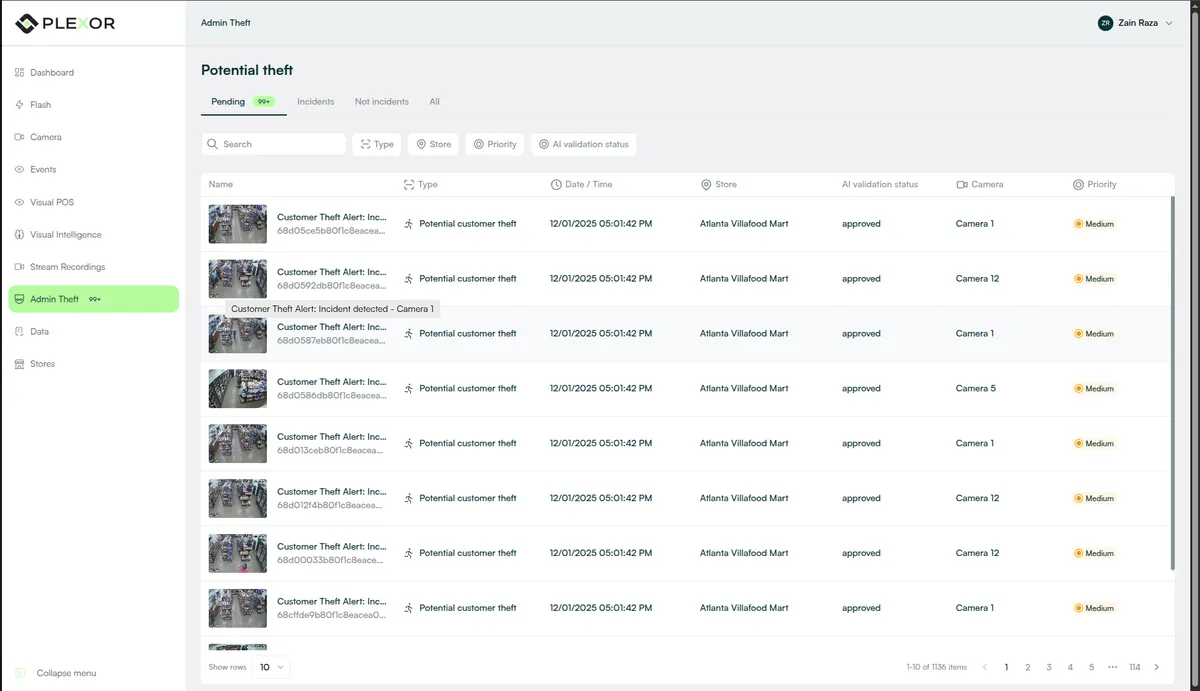
Theft detection across employees & customers
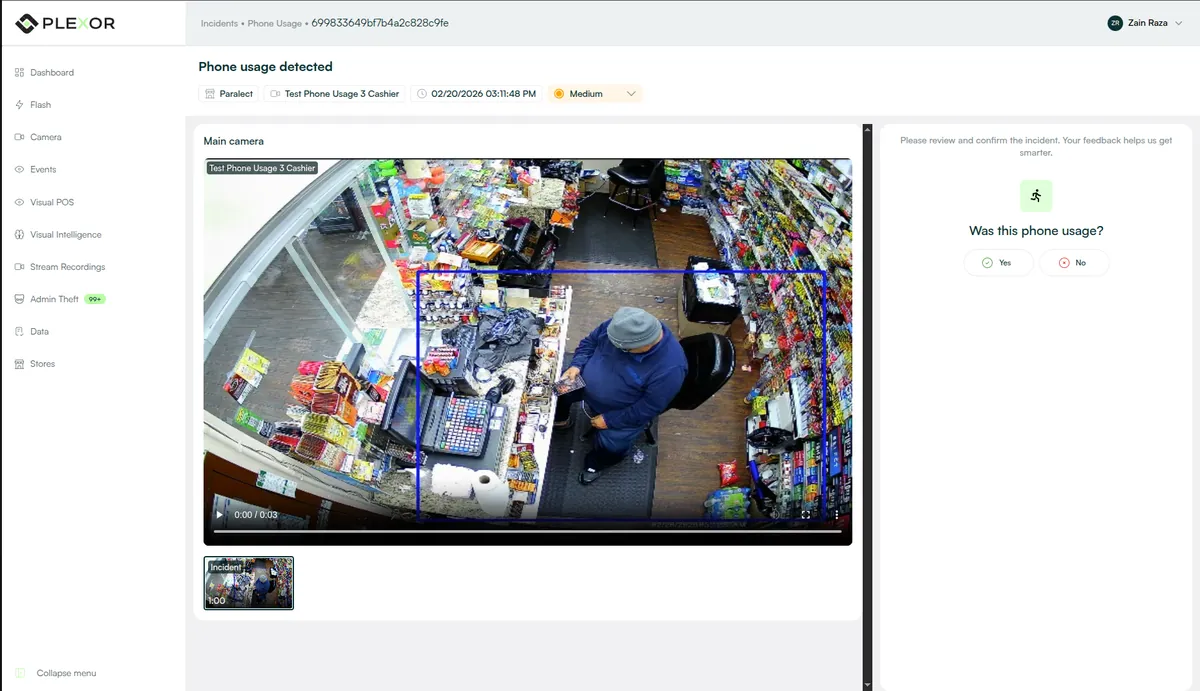
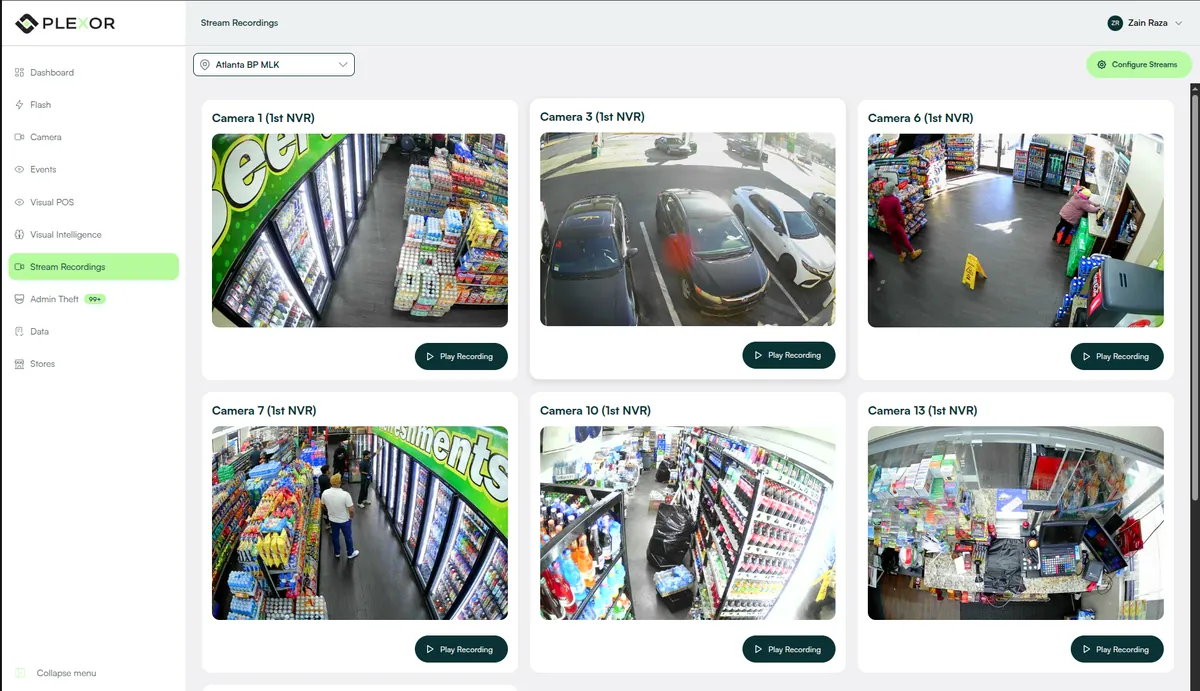
Phone-usage & loitering alerts with live recording streams
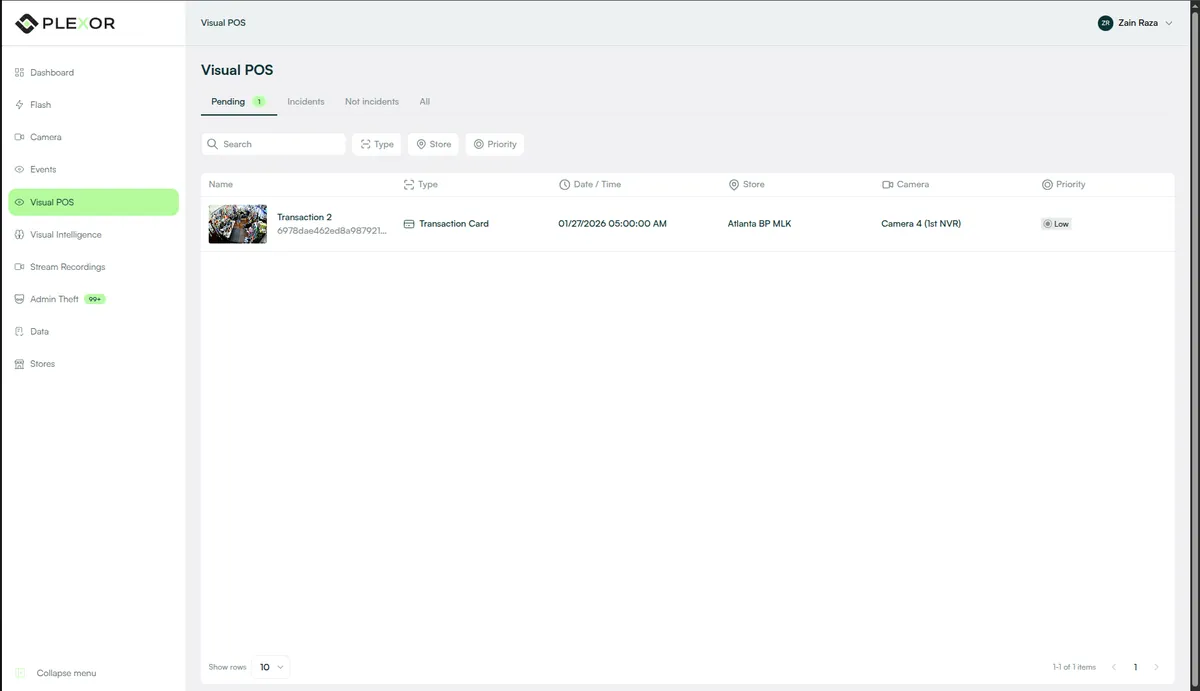
Visual POS & under-ringing detection
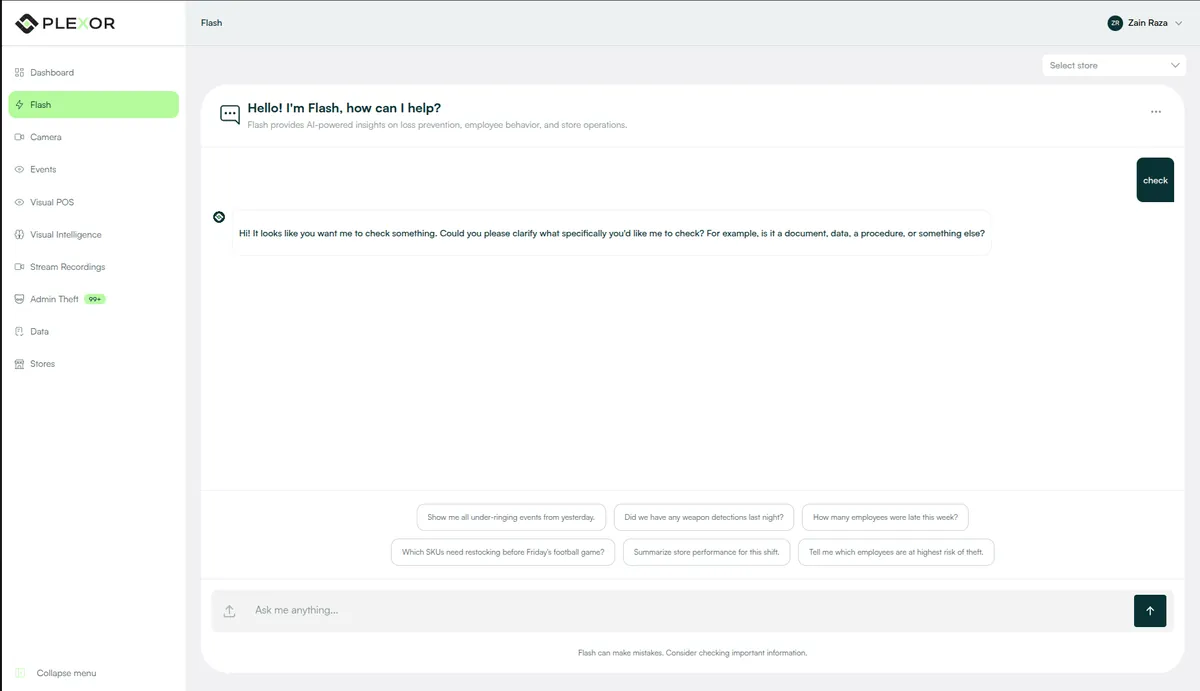
Flash — an AI loss-prevention assistant over the event stream
Architecture & Stack

Realtime vision pipeline, role-scoped delivery.

Edge
Store camerasMulti-camera NVR
Ingest
AWS video servicesMulti-camera stream ingest
Inference
CV inference37+ detection models · ~700ms
Delivery
Node.js backendAlert & event routing
DashboardsStore, district & admin
Stack
Frontend
Next.jsReact
Backend
Node.js
Cloud
AWS video services
Key Decisions
01Realtime multi-camera video and inference pipeline on AWS video services
02Alert and event routing on a Node.js backend, prioritised for the managers who act on it
03Role-scoped dashboards for store, district & admin views
Walkthrough

Inside the product.

Loss-Prevention Console · Web
Plexor live recording streams
Live recording streams
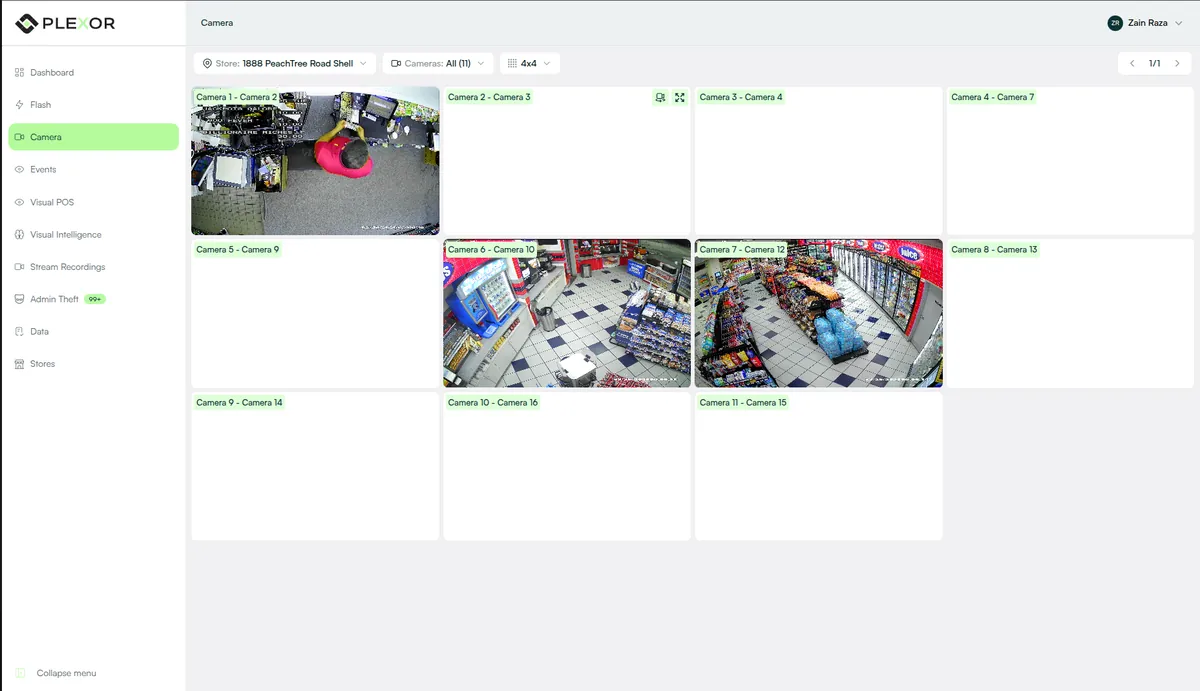
Plexor multi-camera grid
Multi-camera live grid
Plexor theft queue
Theft queue & AI validation
Plexor phone usage detection
Phone-usage detection & review
Plexor visual POS
Visual POS & under-ringing flags
Plexor Flash AI assistant
Flash — AI loss-prevention assistant
100+Stores monitored
~700msRealtime inference
37+Detection models

Surfaced theft and POS under-ringing events in real time across monitored stores, routing prioritised alerts to the managers who could act on them.

Next case study

ETG — Enforcement‑First Field‑Service OS

→